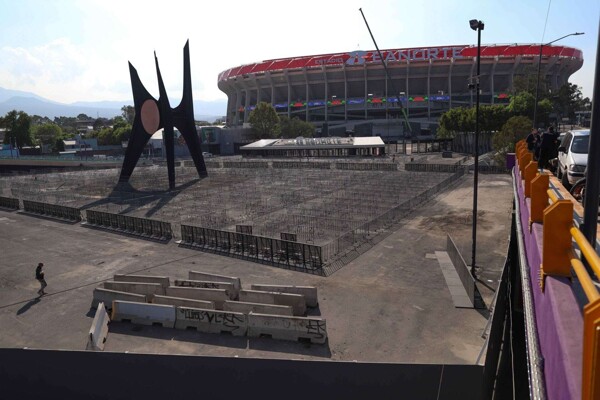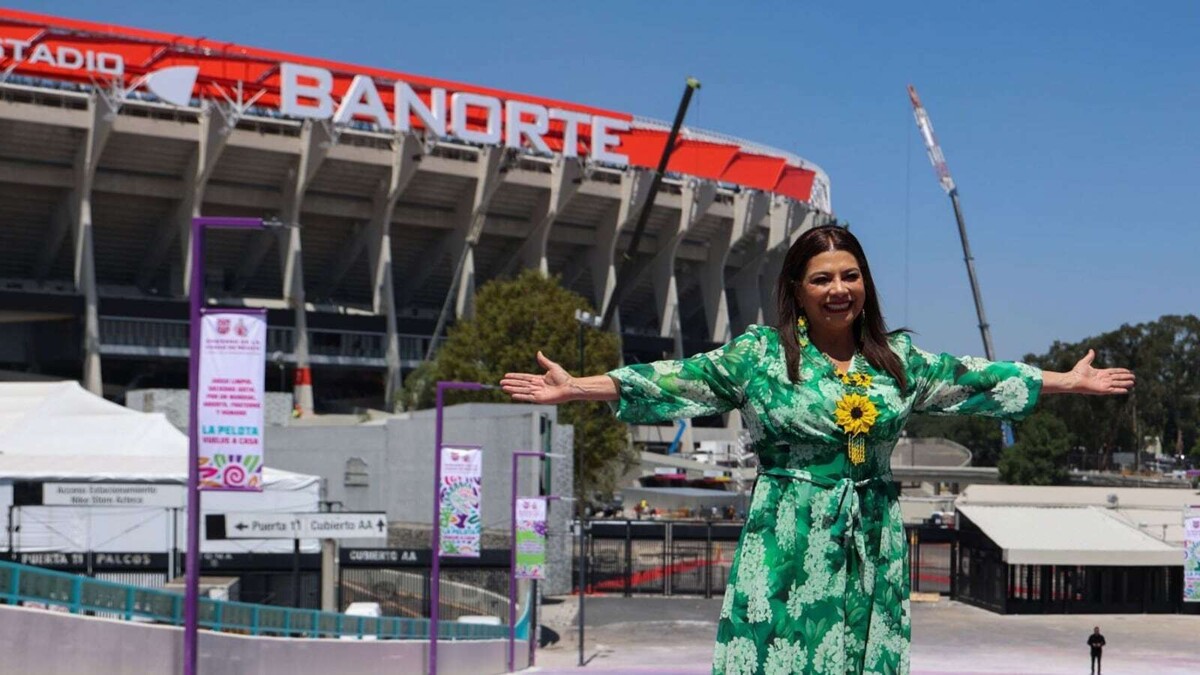
The area around the stadium will undergo a temporary redesign, turning the colosseum into the center of a territorial control ecosystem that will regulate entire blocks and colonies. Mexico City has accumulated experience from the Olympic Games and two World Cups, and has a hotel capacity and two airports – although Felipe Ángeles has connectivity issues and Benito Juárez suffers from saturation – but it faces significant operational risks due to mobility, which is the most vulnerable part, and a public transport system that is underfunded in maintenance and lives in tension. If you decide to take your vehicle to the stadium, note that the Banorte parking is closed because it was used as a warehouse for construction materials for what is yet to be detailed, and that there are not many places to park, neither on Tlalpan nor on the Viaducto, nor towards the south, in the hospital area. Next comes the intermediate perimeter, which FIFA calls the “security perimeter”, where pedestrian access controls, initial inspections before reaching the stadium, and police and private security checkpoints – barricades – are placed, which only those with a digital ticket, accreditation, or who prove they are residents of the sealed zone can pass. Finally, you will find the inner perimeter, the so-called “sterilized zone”, which is the strictest, immediately around the stadium, where you must expect security inspections, detectors, and specific prohibitions on objects that cannot be brought into the stadium, which you can consult in the FIFA Code of Conduct at the following address: https://shorturl.at/0wlMr. The area between the stadium and the outer perimeter was called by the authorities “the last mile”, like in telecommunications, although that 1,600-meter stretch is actually elastic. If you are going for a life experience, as the re-inauguration of one of the most imposing stadiums in the world will be, arm yourself with patience because you will experience restrictions from quite far from the stadium, due to the staggered, slow, and controlled access. One of the external demands is the implementation of perimeter security rings, although their size and rules vary depending on the host country, the stadium, and the risk context. At each World Cup, to avoid thinking it is an autochthonous product of the capital, concentric security zones are established. There is an outer perimeter, where vehicle circulation around the stadium is closed, with restrictions on unauthorized transport, and urban control begins, which in the case of Mexico City will be one kilometer. Distances of no less than one kilometer have been applied in some FIFA games in the past, such as high-risk ones – do you remember hooligans? – or in inaugurations, like the one that will take place this year in Mexico. In recent World Cups, such as Qatar in 2022 or Russia in 2018, the perimeters varied considerably depending on the stadium and the city, based on threat assessments such as terrorism or social unrest, urban infrastructure, stadium capacity, technology for social control (like C-5), and local laws, which, at least the latter, we know are as flexible as chewing gum. Those who use public or platform taxis will arrive at three designated areas for passenger pick-up and drop-off, from where they will have to walk: Viaducto Tlalpan, in the Huipulco roundabout area and San Fernando Avenue, is almost two and a half kilometers from the stadium; Renato Leduc Avenue, which crosses with Tlalpan Avenue behind the Azteca-Banorte, is approximately one and a half kilometers away, and the third, Paseo de Acoxpa, is one kilometer and 700 meters. It neither injected money into infrastructure, losing the opportunity to modernize the city, nor complicated its life, transferring the ordeals of getting to the stadium to the fans, who will have to invest about three hours to get to the initial whistle. The utopias that the head of the capital government, Clara Brugada, imagined when she governed Iztapalapa and has now extended throughout Mexico City, will become a dystopia. The Mexico City government resolved the vehicle traffic for the Mexico vs. Portugal match this Saturday, at the re-inauguration of the Azteca Stadium, renamed by its new sponsor as Banorte Stadium: it will not allow private vehicles – except for a few from the box seats and special guests – to reach the colosseum. This Saturday's match, beyond the sporting aspect, will be a laboratory to test governmental capabilities, with the small details with which they prepared for the World Cup, with the expectation that the failures that arise will be corrected. It also organized special runs of the Metro, Trolebus, and Metrobús to Huipulco from as far away as Bellas Artes, 18 kilometers away, prioritizing transport for fans in the western part of the city. The lack of a real access plan to the stadium, without a new road architecture, and the improvisation based on the experience the capital government has every time there are failures in the Metro – we must recognize that it is extensive due to the frequency with which that public transport fails – anticipate that this Saturday, a day of great vehicular flow, traffic will be distressing, the congestion higher than the standards, possibly the highest in the world, and for many, perhaps, excruciating. The city government has not published definitive maps of the perimeters, but has announced general guidelines for this Saturday, which have to do with the material and existential concerns of how to get to the stadium. Not everything is a product of their creativity (eye, that's irony), but also a tropicalized attempt to adapt the city to the parameters that FIFA designs for World Cup host venues, with the least effort. For everyone, no matter how they arrive, there will only be two entrances: from Huipulco or Tlalpan Avenue, and from Santa Úrsula or Imán Avenue. The authorities have said they want to prioritize public transport, and from four hours before the match starts – at seven in the evening – there will be remote parking lots, which is a euphemism that laughs at the fans, like the one at Santa Fe Shopping Center about 30 kilometers away, and the one at Plaza Carso at 20. Easy. Or not.